
 570.371.4760



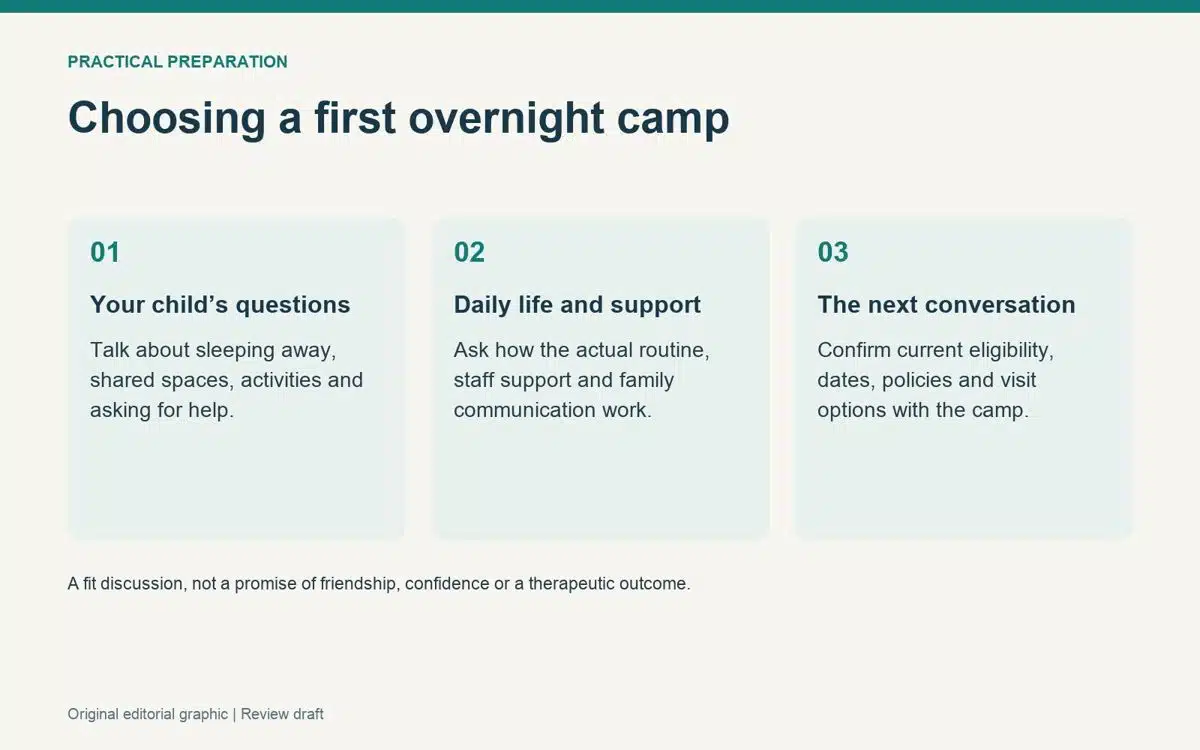
Before choosing a first overnight camp, have a direct conversation about the support your son uses in everyday life. Explain what helps him settle, communicate, manage belongings and ask for help. Then ask the camp which needs it can meet, how information is shared with the appropriate staff and what must be resolved before enrollment.
This conversation is more useful than hoping staff will discover important details after arrival. It also gives your son a voice in planning a summer away from home.
Camp Shohola is a boys’ sleepaway camp in Greeley, Pennsylvania. Its parent FAQ explains cabin life, daily responsibilities, meals and other practical arrangements. Use those details to prepare a focused discussion about your own child.
Describe everyday situations, not just labels
A broad description such as “he is shy” or “he is very independent” can mean different things to different people. Give an example instead: “He enjoys joining a group once someone explains the activity,” or “He manages his clothes well but needs a reminder to check his bag.”
Include strengths as well as difficulties. Knowing that a boy enjoys helping set a table, learns well from a demonstration or becomes comfortable through a familiar activity can make the conversation more balanced.
A diagnosis, medical concern or learning need may also be relevant. Share it through the camp’s appropriate process, and ask who should receive supporting information. A brief description of the support involved helps the director understand what a label means in practice.
Walk through the ordinary parts of the day
The typical-day schedule includes cabin cleanup, instructional activities, meals, rest time and evening activities. Those transitions provide useful prompts.
Ask your son what he expects to manage easily and what feels unfamiliar. Does he know how he would ask a counselor about a missing item? What helps him settle when plans change? Is there a bedtime routine that is important for staff to understand?
The aim is not to rehearse every minute of camp. It is to identify a few situations that may need discussion and find out how the camp handles them. Published schedules are a starting point; confirm current arrangements for the session you are considering.
Make a short parent–camper note
Use the following headings for a conversation with the director. This is a family planning tool, not an official camp form or an alternative to required health paperwork.
| Topic | Useful information to share |
|---|---|
| Communication | How your son asks questions, expresses discomfort or requests help |
| Transitions | What helps when moving between activities or changing plans |
| Daily tasks | What he manages independently and where reminders help |
| Settling in | Previous overnight experiences and what made them easier |
| Health and food | Needs that require the camp’s formal health or dietary review |
| Strengths and interests | Activities and responsibilities he enjoys |
Keep the note current and specific. A short account of what works now is usually more useful than an exhaustive history of every past difficulty.
Discuss health and dietary needs before committing
Camp Shohola’s FAQ describes its health arrangements and invites families to discuss individual food allergies and dietary needs. That invitation is a reason to contact the camp, not to assume every situation can be accommodated without a plan.
Ask how medication information is submitted, who reviews health needs and what documentation is required. For an allergy or medical condition, arrange the appropriate conversation with the camp’s designated staff and your child’s healthcare professional where needed.
Confirm the actual plan before enrollment. A general description on a website cannot determine whether a particular staffing arrangement, environment or activity will meet your son’s needs.
Ask how information reaches the people who need it
Parents may speak with a director months before arrival, while counselors meet the camper later. Ask how relevant information is recorded, updated and shared with appropriate staff.
Find out who will be your point of contact and how to report a change before the session. If a support strategy depends on equipment, a particular environment or staff involvement, ask explicitly whether it is available and how it would work.
There is also room to discuss privacy. Your son may be comfortable sharing some information with the director but worried about other campers hearing it. Ask how the camp handles those concerns while giving staff the information needed to care for him.
Include your son in the plan
Let him help choose the words used to describe his preferences and strengths. Ask which questions he would like to raise himself. For example: “Who can I talk to if I’m confused about my schedule?” is a useful question for a camper to own.
Review the camp’s activity program together and identify interests that make him curious. Balance practical planning with the reasons he wants to go. Preparation should leave space for excitement, discovery and ordinary camp fun.
Questions first-time families often ask
Should we mention a concern that seems minor?
If it affects daily participation or the support your son needs, include it in the conversation. A concrete example helps the camp assess its relevance.
Does sharing a need guarantee accommodation?
No. Ask the director what is feasible and resolve essential arrangements before enrolling. Do not rely on a general website statement.
Should we prepare our own medical instructions?
Use the camp’s required forms and review process. A family planning note can support the conversation but does not replace medical documentation or professional instructions.
What if his needs change after we apply?
Contact the camp promptly and ask how to update the relevant records and arrangements.
How can we begin the conversation?
Contact Camp Shohola with the session you are considering and a brief explanation of the questions you want to discuss. A specific conversation helps both family and camp decide whether the fit is right.