
 570.371.4760


Land Sports at Camp Shohola for Boys: Coaching Approach, Age-Based Programming, and Player Development
For families evaluating summer camp sports, the decision often centers on more than physical activity alone. Parents want to understand how sports are taught, whether instruction matches a child’s age, and how participation supports confidence and maturity. At Camp Shohola for Boys, land sports are designed as structured learning experiences that support growth through consistency, guidance, and intentional programming.
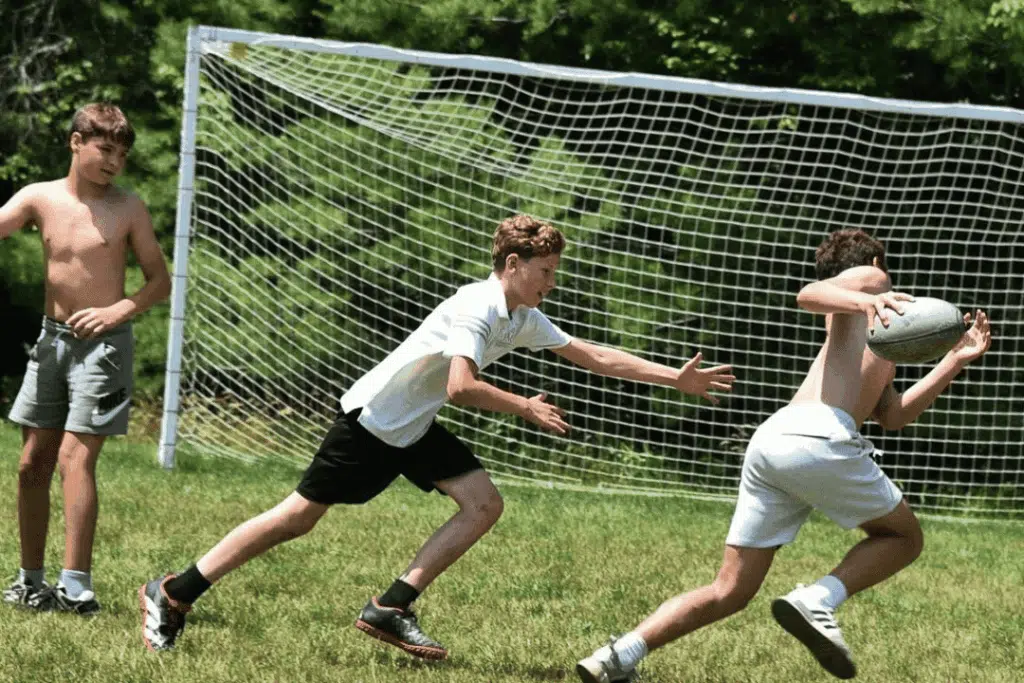
Rather than treating athletics as informal recreation, Camp Shohola integrates sports into a broader developmental framework. Its land sports model reflects the values parents often seek in youth sports camps: clear instruction, supportive environments, and meaningful progression over time. Through thoughtful planning and purpose-driven instruction, campers experience skill-building that contributes to long-term player development without unnecessary pressure.
Overview of Camp Shohola’s Land Sports Program
Land sports at Camp Shohola for Boys are built around structured instruction, age-appropriate programming, and observation-based coaching rather than competition-driven metrics. Through consistent daily participation, campers develop physical skills, confidence, and teamwork at a pace aligned with their readiness, supporting a positive environment for long-term growth.
A Coaching Approach That Focuses on Learning First
A strong coaching approach is central to how land sports function at Camp Shohola. Coaches prioritize teaching fundamentals and decision-making before emphasizing competition, helping campers understand both the “how” and the “why” behind each activity.
Over the course of a session, coaches observe how campers respond to instruction across different sports formats, including team games, skill stations, and small-group drills. Changes such as increased willingness to attempt new skills or more consistent communication during group play help staff fine-tune instruction without formal evaluation.
This coaching approach emphasizes:
- Clear explanations and demonstrations
- Constructive feedback during play
- Encouragement that supports confidence and effort
By maintaining consistency in instruction, coaches help campers feel comfortable trying new skills and learning from mistakes. This learning-first mindset allows sports participation to feel supportive rather than intimidating, especially for boys still developing confidence in athletic settings.
How Instruction, Practice, and Reflection Shape Player Development
Land sports at Camp Shohola follow a consistent learning pattern that helps campers understand expectations and recognize progress over time. Rather than relying on unstructured play alone, activities are designed around a simple instructional flow.
Sessions typically begin with clear instruction, where coaches explain goals and demonstrate techniques in an age-appropriate way. This is followed by guided practice, allowing campers to apply skills through structured drills and group play. Coaches remain actively involved, offering feedback and adjusting activities based on group readiness.
Reflection is the final component. Campers are encouraged to recognize effort, improvement, and teamwork rather than focusing solely on outcomes. This approach helps boys connect practice with progress, reinforcing confidence and encouraging long-term engagement with sports.
Examples of How Skills Are Reinforced During Land Sports
Rather than relying on a single teaching method, land sports activities reinforce skills through repeated exposure in different formats. Campers may practice a skill during a structured drill, apply it during small-group play, and later encounter it again in a team-based game. This layered approach helps campers recognize concepts across situations rather than memorizing isolated techniques.
For example, communication skills introduced during warm-up activities are reinforced during group strategy discussions and naturally applied during gameplay. Similarly, coordination developed through individual drills carries over into partner activities and team settings, allowing campers to build confidence through familiarity rather than pressure.
By encountering the same skills in varied contexts, campers are better able to internalize learning while remaining engaged and supported throughout daily activities.
How Camp Shohola Structures Sports Learning Across a Session
Land sports programming follows a consistent daily rhythm designed to balance instruction, activity, and recovery. Sessions typically move from guided explanation into active participation, followed by opportunities for informal application during group play. This structure allows campers to remain engaged while avoiding overload.
By revisiting core skills across different parts of the day rather than concentrating instruction into a single block, campers are able to absorb learning gradually. This approach supports retention, confidence, and sustained participation without relying on formal assessment or performance comparison.
How Coaches Adjust Instruction Based on Camper Readiness
Within land sports activities, coaches make ongoing adjustments based on camper readiness rather than fixed performance benchmarks. Readiness is observed through attention level, coordination, confidence, and engagement during activities.
Coaches rely on repeated exposure rather than single moments to assess readiness. A camper’s progression is informed by consistency across days, not isolated performance, allowing instruction to remain responsive while preserving confidence and enjoyment.
When campers demonstrate comfort with a skill, instruction naturally progresses toward more complex movement, strategy, or teamwork. If a camper appears hesitant or overwhelmed, coaches adjust pacing, simplify objectives, or provide additional guidance. This flexibility allows instruction to remain supportive without slowing group progress.
By relying on observation instead of evaluation, campers experience growth at an appropriate pace while maintaining a positive relationship with sports participation. Instructional adjustments are typically guided by observable factors such as attention span, consistency of effort, and comfort working within a group rather than by performance outcomes alone.
What Coaches Look for During Daily Sports Activities
During daily land sports sessions, coaches focus on observable behaviors that indicate how campers are engaging with instruction and group play. These observations help staff adjust activities in real time without formal assessment or performance pressure.
Coaches typically look for patterns such as sustained attention during instruction, willingness to attempt new skills, responsiveness to feedback, and comfort participating within a group. These cues provide insight into how campers are processing instruction and whether adjustments in pacing or structure are needed.
By using consistent observation across multiple days, coaches are able to support development while maintaining a positive and encouraging sports environment.
How Progress Is Evaluated Without Formal Competition Metrics
In a summer camp sports setting, progress is not measured through scores, rankings, or comparative performance. Instead, coaches focus on effort, consistency, and engagement across repeated activities.
Progress is often reflected in a camper’s increased confidence during play, improved communication with teammates, and greater comfort applying skills independently. These indicators help staff recognize development without shifting focus away from participation and enjoyment.
This approach allows sports instruction to remain supportive and growth-oriented while avoiding unnecessary performance pressure.
When Coaches Slow Progression to Support Long-Term Development
Progression in land sports is intentionally paced, and advancement is not automatic. When campers show signs of fatigue, frustration, or reduced engagement, coaches pause progression rather than pushing toward more complex objectives. Staff often note that slowing progression during earlier activities helps campers re-engage more fully during later sessions, particularly after periods of frustration or fatigue.. By reinforcing fundamentals first, campers tend to participate more confidently when new challenges are reintroduced, supporting sustained engagement rather than short-term performance.
Slowing instruction allows campers to rebuild confidence, reinforce fundamentals, and maintain enjoyment during participation. This approach helps prevent burnout and supports long-term comfort with physical activity, especially for campers still developing coordination or self-assurance.
By treating readiness as fluid rather than fixed, the program prioritizes sustainable growth over short-term performance, reinforcing a positive relationship with sports throughout the summer.
Age-Based Programming Within Structured Summer Sports Programs
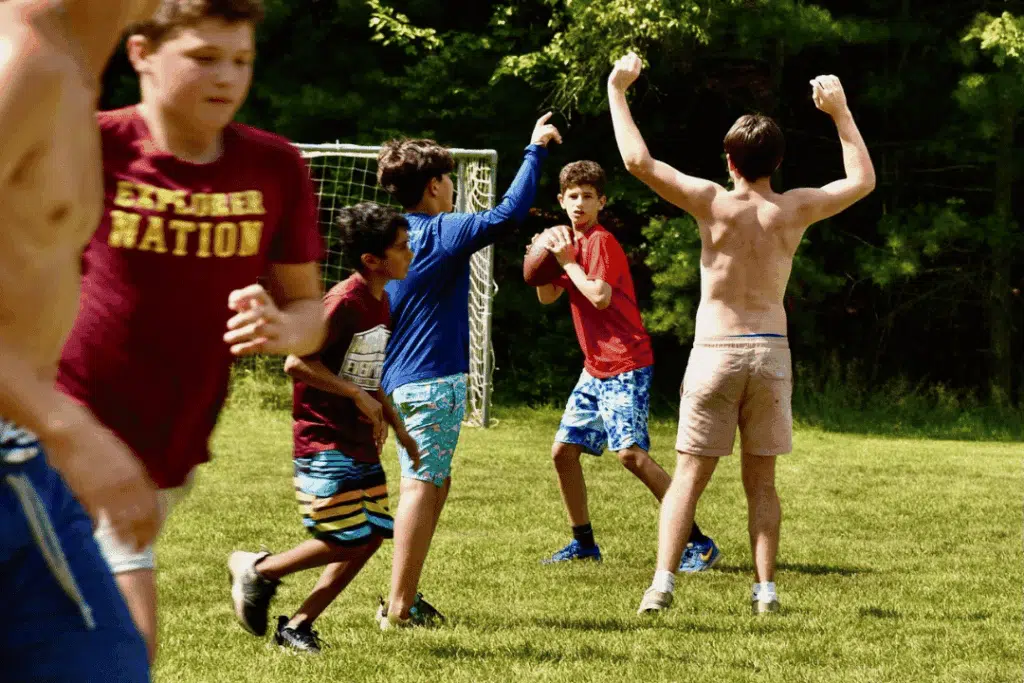
Effective land sports instruction recognizes that children develop at different rates. Camp Shohola aligns activities with campers’ physical, emotional, and cognitive stages, ensuring that expectations remain realistic and encouraging. This structure is a defining feature of well-designed summer sports programs.
Age-based programming in land sports reflects differences in attention span, physical readiness, and learning style. Younger campers are typically introduced to activities through shorter sessions and simplified objectives, while older campers engage in longer periods of play that emphasize coordination, decision-making, and teamwork. This progression allows instruction to remain aligned with developmental readiness rather than a one-size-fits-all approach.
Younger campers are introduced to:
- Basic movement and coordination
- Rules through guided play
- Positive group participation
As campers mature, activities gradually incorporate:
- Advanced techniques and strategies
- Greater teamwork and responsibility
- Increased independence during play
This progression allows campers to feel challenged without being overwhelmed, supporting steady improvement throughout the summer.
Supporting Player Development Through Daily Participation
Athletic growth is only one part of the experience. At Camp Shohola, player development includes physical skills, emotional resilience, and social awareness. Land sports provide daily opportunities for campers to practice collaboration, communication, and problem-solving. Because land sports occur consistently throughout the session, coaches can recognize subtle changes in confidence, cooperation, and self-regulation that may not appear in short-term programs. This continuity allows development to unfold naturally rather than being rushed or forced.
Daily participation allows coaches to observe campers consistently rather than making assumptions based on isolated performances. Because activities repeat across the session, staff can adjust groupings, pacing, and instruction as campers grow more comfortable.
This continuity helps campers experience improvement gradually, reducing pressure to perform immediately. It also allows coaches to recognize when a camper may benefit from additional guidance or encouragement, reinforcing development through familiarity rather than evaluation.
Regular involvement in these activities helps reinforce growth through:
- Repetition of foundational skills
- Exposure to multiple sports formats
- Team-based activities guided by coaches
These experiences help campers understand how effort leads to progress while learning how to navigate both success and setbacks in a group setting.
Why Youth Sports Camps Emphasize Transferable Skills?
Many families choose youth sports camps because they encourage well-rounded growth rather than early specialization. Camp Shohola’s land sports philosophy emphasizes skills that transfer across different activities and environments. Unlike programs that focus on early specialization, summer camp sports environments emphasize adaptability and enjoyment to support long-term participation.
These transferable skills include:
- Balance and coordination
- Spatial awareness
- Communication and teamwork
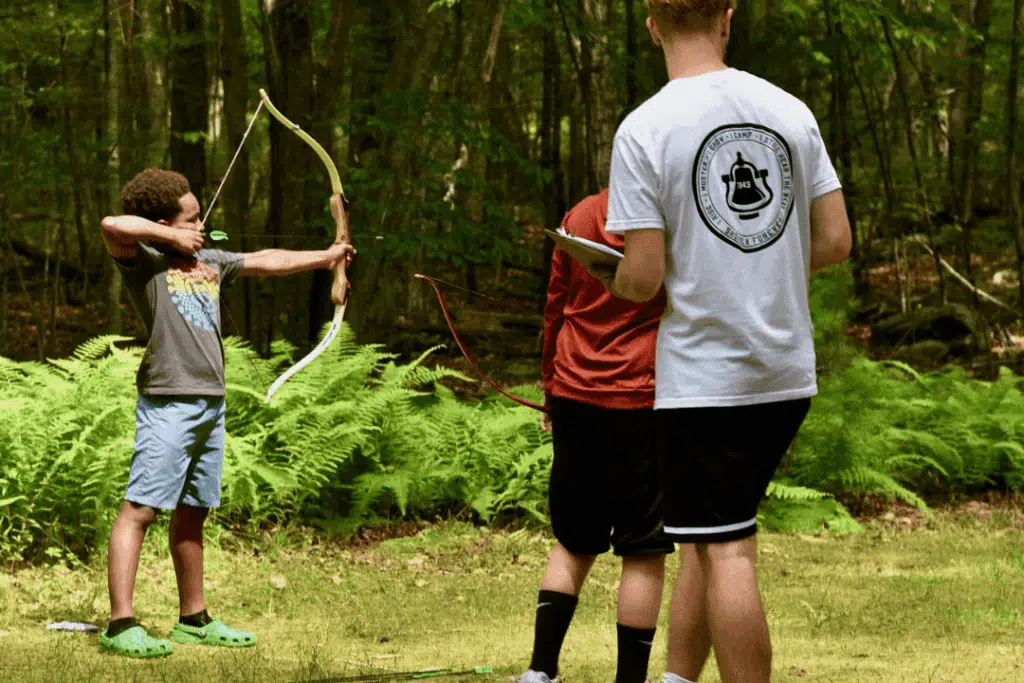
By participating in a variety of sports, campers build a foundation that supports adaptability and long-term engagement. Youth sports camps that promote versatility help keep athletics enjoyable and accessible for children with varying interests and experience levels.
Building Confidence Through Summer Camp Sports
Confidence grows when campers see measurable progress over time. Through structured instruction and supportive feedback, summer camp sports at Camp Shohola allow boys to recognize their own improvement.
This confidence-building process includes:
- Mastering new skills
- Taking responsibility within team settings
- Learning accountability during play
As campers become more comfortable with challenges, they gain independence and self-assurance that extends beyond the sports field.
How Summer Sports Programs Encourage Social Growth?
In addition to physical development, summer sports programs play a significant role in helping campers build social skills. Team-based activities create opportunities for cooperation, communication, and shared problem-solving.
Campers learn how to:
- Work toward common goals
- Respect teammates with different abilities
- Practice sportsmanship in competitive situations
These lessons are reinforced naturally through daily participation, making sports an effective platform for social learning.
A Balanced Environment for Long-Term Growth
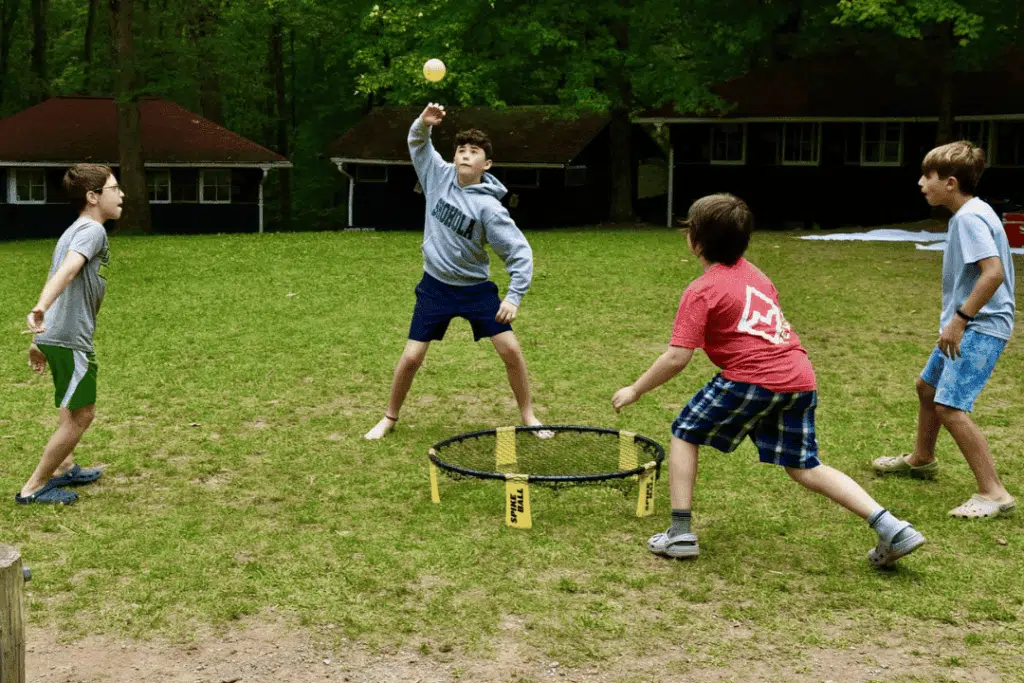
By combining intentional instruction with age-appropriate expectations, Camp Shohola creates a balanced sports environment. Its land sports framework reflects a thoughtful coaching approach that values learning, effort, and steady improvement over short-term outcomes.
Through this structure, campers experience meaningful player development while enjoying an active and engaging summer experience. Families seeking youth sports camps that emphasize both skill-building and personal growth often find this balance especially valuable.
Frequently Asked Questions About Summer Camp Sports
What makes summer camp sports different from school or league athletics?
It is focused on participation, learning, and personal growth rather than rankings or performance pressure. Camp-based sports environments allow boys to build skills at their own pace while enjoying teamwork and daily activity.
How do youth sports camps support children at different skill levels?
Youth sports camps are designed to accommodate beginners and more experienced campers by grouping activities according to age and ability. This structure helps campers feel comfortable learning new skills while staying appropriately challenged.
Why is player development emphasized in camp-based sports programs?
Player development in camp settings extends beyond athletic technique. Camp sports environments help boys build confidence, resilience, and teamwork skills through guided instruction and consistent participation.
What role does coaching play in structured summer sports programs?
A clear coaching approach helps campers understand expectations, learn fundamentals, and receive constructive feedback. In summer sports programs, coaches guide learning while creating a supportive atmosphere that encourages effort and improvement.
Learn More About Summer Camp Sports at Camp Shohola for Boys
Families interested in how land sports support confidence, teamwork, and long-term development can explore Camp Shohola for Boys and its structured approach to youth programming. Founded in 1943 and led by three generations of the Barger family, Camp Shohola’s programs are shaped by decades of educational leadership, outdoor experience, and a long-standing commitment to child development. This continuity ensures that sports instruction remains consistent, age-appropriate, and aligned with the camp’s broader educational philosophy
In practice, this approach is carried out by trained coaches and seasonal staff who are selected for their experience working with children and are guided in age-appropriate instruction, supervision standards, and consistent coaching methods throughout the session.
Learn more about how Camp Shohola’s land sports program supports steady growth, confidence, and teamwork through thoughtful instruction and long-standing leadership.